
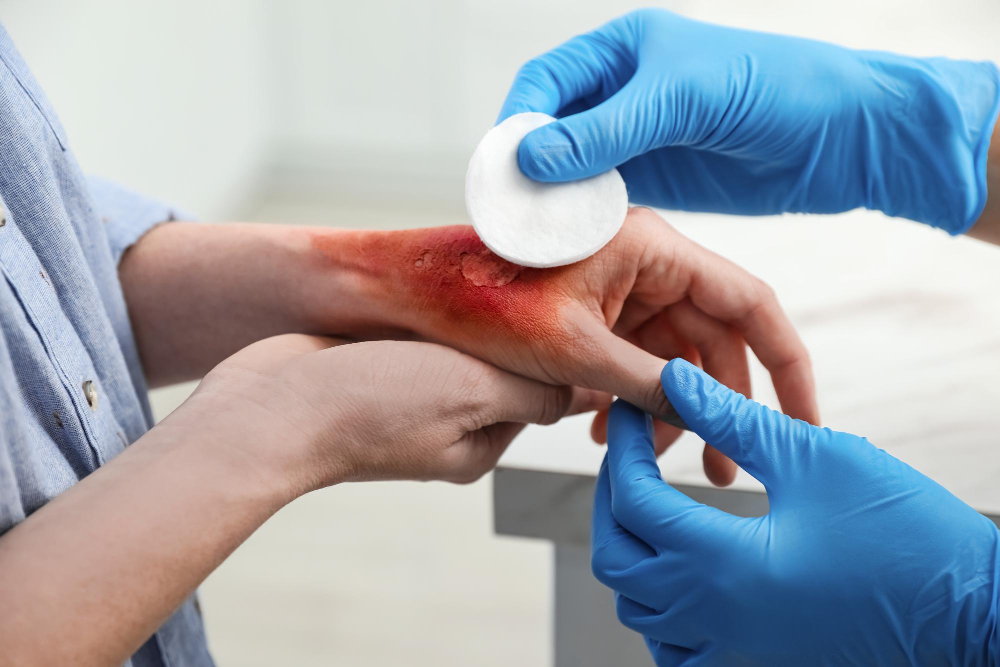
Dealing with Burns: Immediate Steps to Prevent Complications

What Are Burns?

Burns are injuries to the skin or deeper tissues caused by heat, chemicals, electricity, or radiation. Dealing with burns quickly can help prevent complications. Burns can be minor or severe. They often cause pain, redness, swelling, or blisters. Sometimes, burns can even damage muscles or bones. Because burns can be serious, it is important to know how to respond right away.

Common Causes of Burns

Many things can cause burns. For example, you might get burned by:

  • Touching hot objects like stoves or irons
  • Spilling hot liquids, such as tea or soup
  • Exposure to open flames or fire
  • Chemicals like cleaning products
  • Electricity from faulty wires or outlets
  • Sunburn from too much sun exposure
  • Because burns can happen at home, work, or outdoors, it is wise to stay alert in risky situations.

    Types and Severity of Burns

    Burns are grouped by how deep they go into the skin. Understanding the type helps guide first aid and care. There are three main types:

  • First-degree burns: Affect only the top layer of skin. The area looks red and may hurt, but there are no blisters.
  • Second-degree burns: Go deeper. The skin may blister, swell, and look red or wet.
  • Third-degree burns: Damage all layers of the skin. The area may look white, brown, or charred. Often, these burns feel numb due to nerve damage.
  • Because severe burns can be life-threatening, quick action is important.

    Immediate First Aid Steps for Burns

    Acting fast can help reduce burn complications. If you or someone else gets burned, follow these steps:

  • First, remove the person from the source of the burn.
  • Next, cool the burn with cool (not cold) running water for 10-20 minutes.
  • After that, remove tight items like rings or watches before swelling starts.
  • Then, cover the burn with a clean, non-stick cloth or bandage.
  • For pain, you may use over-the-counter pain relief if needed.
  • However, do not use ice, as it can damage the skin further. Always keep the burned area clean and dry.

    What to Avoid After a Burn Injury

    Some actions can make burns worse. To protect the skin, avoid these mistakes:

  • Do not apply butter, oils, or toothpaste to the burn.
  • Never pop blisters, as this can cause infection.
  • Do not use very cold water or ice directly on the burn.
  • Avoid covering burns with fluffy cotton or dirty cloths.
  • Do not ignore signs of infection, such as pus or fever.
  • Because these actions can slow healing, always follow safe burn first aid steps.

    When to Seek Medical Help

    Sometimes, burns need a doctor’s care. Seek medical help right away if:

  • The burn is larger than your palm
  • The burn is on the face, hands, feet, groin, or major joints
  • There are deep or third-degree burns
  • You see signs of infection, like redness, swelling, or pus
  • The person has trouble breathing or has burns from electricity or chemicals
  • The burn does not heal after a few days
  • Because quick treatment can prevent serious problems, do not wait if you are unsure.

    Preventing Complications After Burns

    Proper care helps avoid burn complications. For example, you can:

  • Keep the burn clean and dry
  • Change dressings as advised by your doctor
  • Watch for signs of infection, such as redness or fever
  • Protect the area from sun exposure
  • Follow your doctor’s instructions for wound care
  • Because infection is a common risk, always wash your hands before touching the burn. If you notice any changes, contact a healthcare provider.

    Tips for Burn Prevention at Home

    Many burns happen at home, but you can lower your risk. Try these tips:

  • Keep hot drinks and foods away from table edges
  • Turn pot handles inward on the stove
  • Test bath water before getting in
  • Store chemicals out of children’s reach
  • Install smoke alarms and check them often
  • Use sunscreen when outdoors
  • Because prevention is easier than treatment, make burn safety a daily habit.

    Conclusion

    Burns can happen to anyone, but knowing what to do makes a big difference. If you act quickly and follow safe steps, you can prevent many complications. For personalized advice on burn care and prevention, consult a healthcare professional.